
Blog
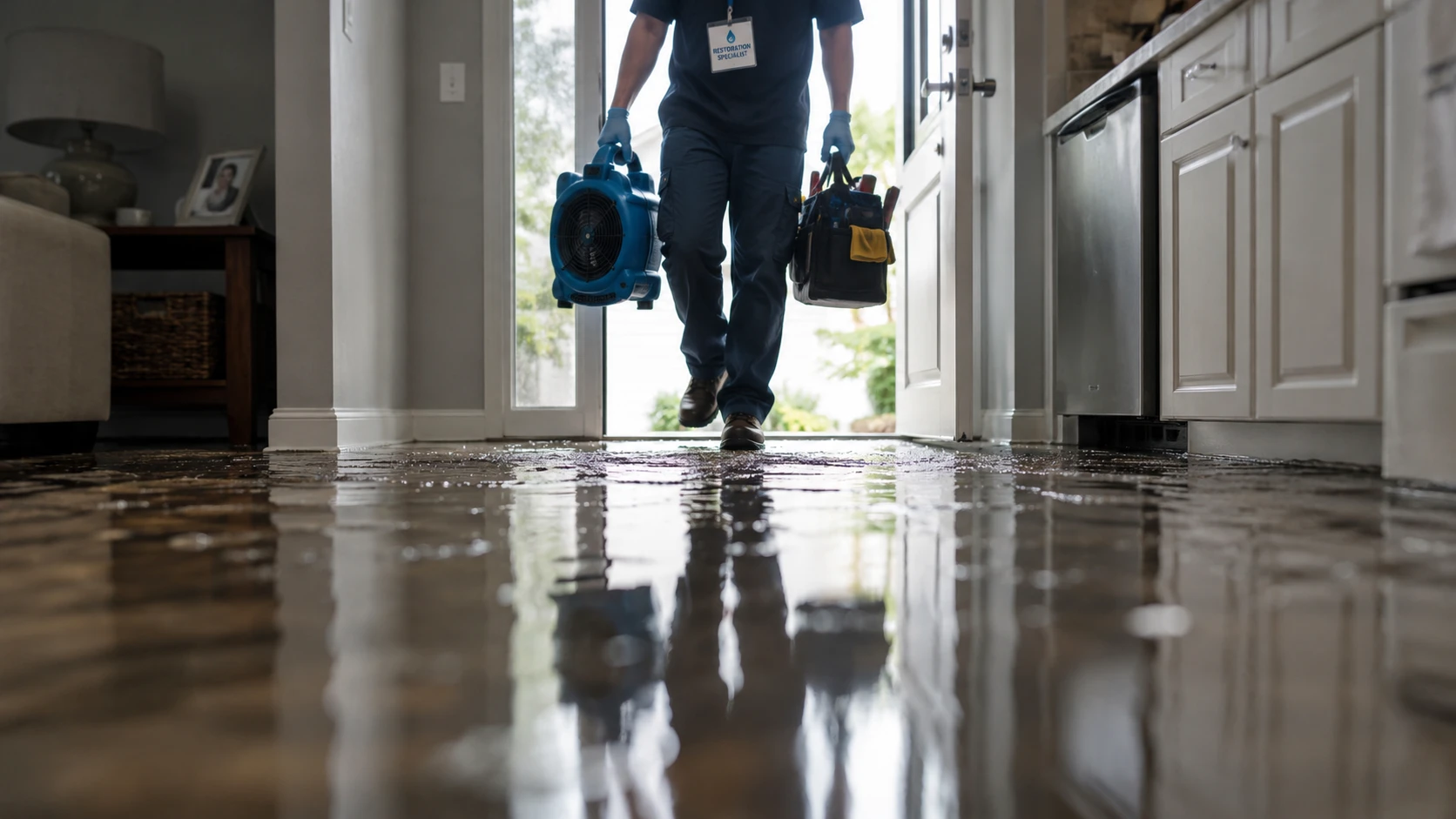
Table of Contents
Shut off the power to the basement at your breaker panel, stay out of standing water until the power is confirmed off, and call a water damage restoration company. Do not start pumping or wading in before the electricity is dealt with — that's the step that hurts people.
I've walked into a lot of flooded basements in Central Ohio, and there's a moment I see on almost every homeowner's face. They're standing at the top of the stairs looking down at six inches of water, not sure if they're allowed to go down there.
The honest answer is usually no — not yet. Search what to do if basement floods and you'll get ten different answers, most of them written by people who've never stood in one.
I'm Dale See, President of PHG Restoration Services in Dublin. Here's what to do when your basement floods, in the order I'd tell you if you called me right now. The first part isn't about saving your basement. It's about keeping you safe.
Kill the power, stay out of the water, stop the source if you can safely reach it, then call for help. Pumping, hauling, and sorting through boxes all come after those four things.
Go to your breaker panel and cut power to the basement circuits. If the panel itself is in the flooded basement, do not go down there — call your utility or an electrician to shut it off at the meter.
Water finds outlets, extension cords, and the bottom of your furnace. You cannot tell by looking whether a basement is energized.
Even with the power off, wear boots and gloves. The CDC's guidance on reentering a flooded home is blunt: floodwater can carry sewage, and the hazards include contamination you can't see.
If water is above your ankles or near the furnace or panel, wait for us.
Burst pipe or failed water heater? Shut off the main water valve. Groundwater or storm water coming in from outside? There's nothing to shut off — and that's a different problem, which I'll get to.
"The number of people who tell me they were standing in the water trying to plug in a shop vac still gets me. I understand the instinct — you want to do something. But the water isn't going to hurt you in the next ten minutes. The electricity might."
Not until the power is off and you know where the water came from. Those two answers determine everything else.
The IICRC S500 standard sorts water into three categories. Clean supply-line water is Category 1. Water that's picked up contaminants is Category 2. Sewage backup and groundwater are Category 3 — grossly contaminated.
That decides what can be saved. Category 3 means carpet, pad, and usually the bottom of the drywall are coming out, no matter how new they are.
In older Columbus areas built on combined sewer lines — Clintonville, German Village and similar — a hard summer storm can push sewage backward into the lowest drain in the house, which is your basement floor drain. If your basement flooded during a downpour and it smells, treat it as Category 3 and don't touch it.
Gasoline pumps and generators go outside, well away from doors and windows. Carbon monoxide from a generator running in a basement or attached garage kills people every year after storms.
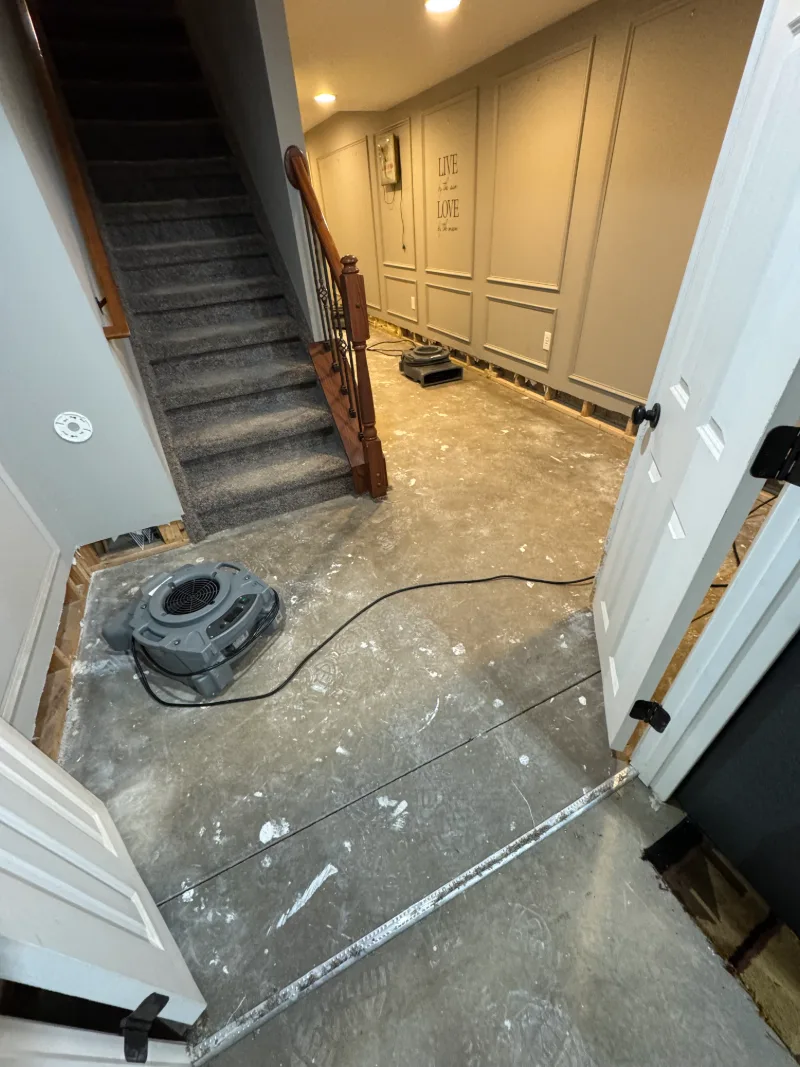
If you're wondering who to call for basement flooding, start with a water damage restoration company. We're equipped to extract water, we're available 24/7, and we can tell you within minutes whether this is a two-day dry-out or a full reconstruction.
A plumber fixes the pipe, which is necessary if a pipe caused it — but it does nothing about the water already in your subfloor, framing, and insulation. If the cause was groundwater or a storm, there's nothing for a plumber to fix at all.
We extract, set drying equipment, and bring in whatever trade the source repair needs.
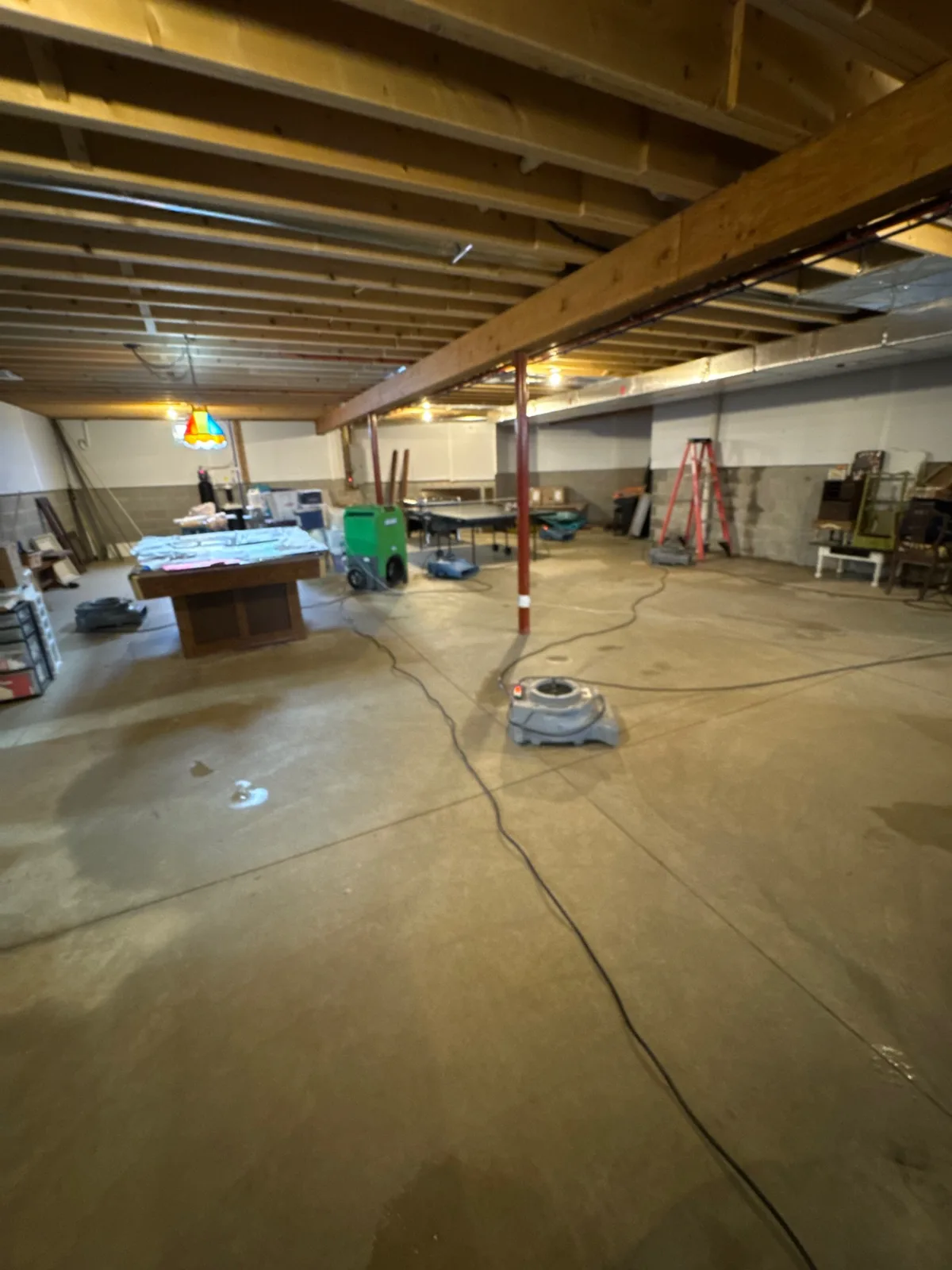
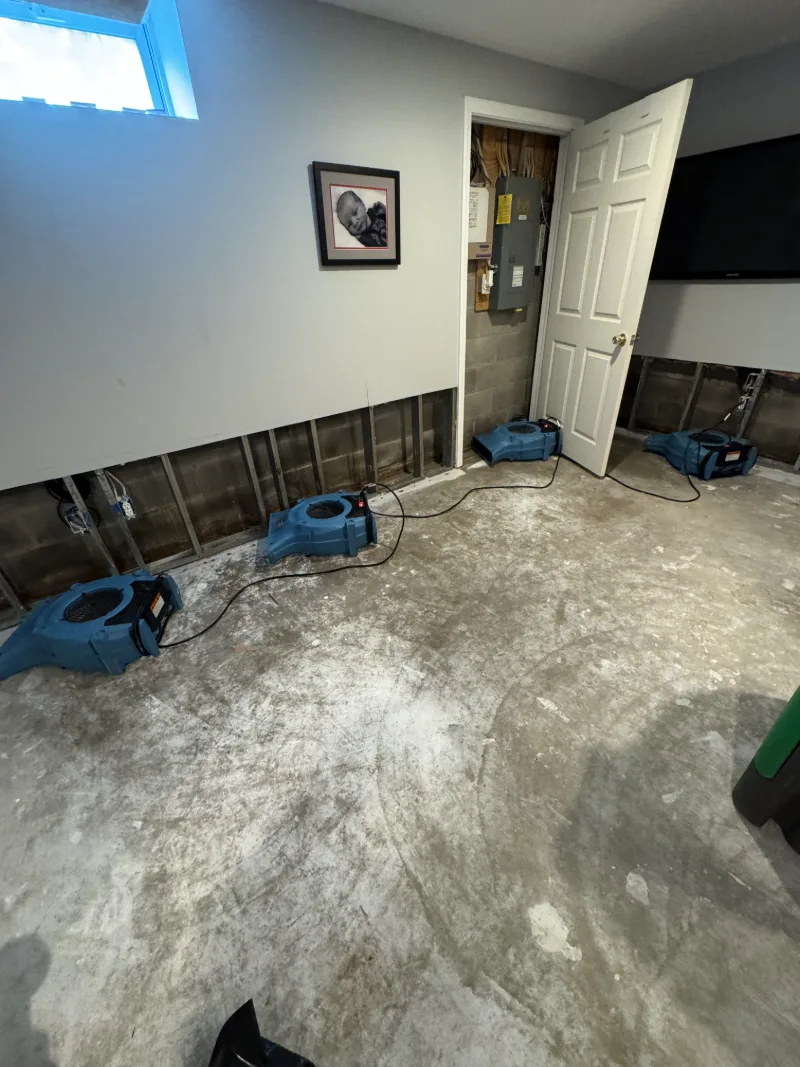
We pump out standing water, pull saturated materials, and set air movers and dehumidifiers — photographing everything and logging moisture readings first.
That documentation is what your adjuster works from later, and it's the biggest difference between a smooth claim and a fight.
Knowing how to clean up a flooded basement comes down to three stages: extract the water, remove what's unsalvageable, then dry the structure itself. Most people stop after the first two, and that's where mold problems start.
Drying a basement isn't the same as making it look dry. Concrete, framing, and the bottom plate of your walls hold water long after the floor feels dry.
We use moisture meters to confirm materials are actually dry instead of guessing. Fans alone in a closed basement just move humid air around — you need dehumidification pulling moisture out.
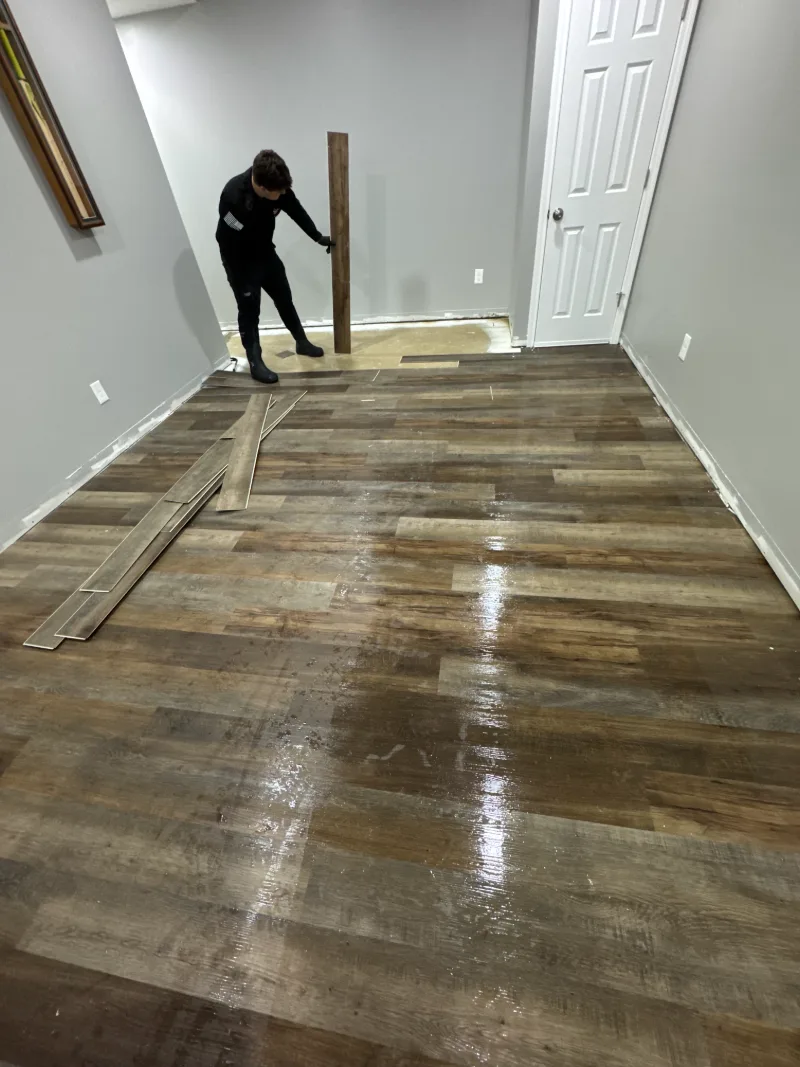
Anything porous that sat in Category 3 water: carpet, pad, upholstered furniture, mattresses, cardboard, particleboard. Solid, non-porous items usually clean and disinfect fine, so we sort those out with you.
Dry it within 24 to 48 hours and in most cases mold won't take hold. Past that you're looking at mold remediation as a separate project, and finished basements hide it well — behind drywall, under carpet pad, inside the wall cavity.
That clock is the real reason knowing what to do when your basement floods matters so much in the first hour. It isn't a sales line, it's just how fast mold moves.
"A basement can look completely fine and still be soaking wet inside the walls. I've had homeowners tell me they handled it themselves with fans over a weekend, and then I'm back six weeks later cutting out moldy drywall. The meter tells the truth, not your eyes."
It depends entirely on where the water came from. Sudden, accidental failures inside your home are usually covered. Groundwater and surface flooding usually aren't.
A burst supply line or a failed water heater is typically covered under a standard homeowners policy. Water that rose through the floor, seeped through the foundation, or came in from outside is generally not — that's flood, and flood needs a separate policy.
I'm a restoration contractor, not an insurance agent, so read your policy and call your carrier. But that's the line nearly every dispute falls on.
Even with an NFIP flood policy, basement coverage is narrow. FEMA's basement coverage fact sheet covers specific installed items — furnace, water heater, sump pump, washer and dryer — but not finished basement improvements, furniture, or keepsakes.
Sewer and drain backup is usually a separate rider too. It's inexpensive, and in older Columbus neighborhoods it's the coverage I'd want most.
Fix whatever failed, then handle water before it reaches the foundation. Most repeat floods I see come down to one of three things.
Here's the pattern every Central Ohio homeowner should know: the storm knocks out power, and your sump pump stops at the exact moment it matters most. The pump didn't fail — the electricity did.
A battery backup solves this, and it's the best money you can spend on a basement here. As for how long does a sump pump last — usually seven to ten years, and almost nobody tests theirs. Pour a bucket of water in the pit twice a year and watch it kick on.
Extend downspouts well away from the foundation, keep gutters clear, and make sure the grade slopes away from the house. The clay-heavy soil around Dublin, Powell, and New Albany drains slowly, so water sits against the foundation and pushes in under pressure.
It usually enters at the cove joint where the floor meets the wall, not an obvious crack — spot the entry point and you can fix it instead of guessing.
"I'd rather sell somebody a battery backup for their sump pump than dry their basement out twice. We're going to be in this town a long time, and the second call is the one that tells me I didn't do my job the first time."
Shut off electricity to the basement at your breaker panel. If the panel is in the flooded area, do not go down — call your utility or an electrician. Everything else waits until the power is off.
A small amount of clean water from a known source, caught immediately, is often manageable. Anything involving sewage, groundwater, standing water more than an inch or two, or water that's been sitting overnight should be handled professionally.
Typically three to five days with proper equipment, depending on how much water there was and what materials got wet. We take daily moisture readings rather than working off a fixed schedule.
Usually not. Rain that enters as surface water or groundwater is considered flood damage and requires separate flood insurance. Rain entering through a storm-damaged roof is often treated differently — check with your carrier.
Roughly 24 to 48 hours in normal indoor conditions. Basements are warm, humid, and poorly ventilated, which pushes it toward the faster end.
If your basement is under water right now, the order matters: power off, stay out of the water, stop the source if you safely can, then call. Knowing what to do when your basement floods in those first thirty minutes genuinely changes what the next three weeks look like.
We're veteran-owned, IICRC certified, and based in Dublin. We handle water damage restoration and basement water removal in Columbus, Powell, Hilliard, Westerville, and Upper Arlington — usually same day.
Call (614) 359-3154 anytime, 24/7. A real person picks up, and we'll give you our honest read before we send anyone out. If it's something you can handle yourself, we'll tell you that too.